
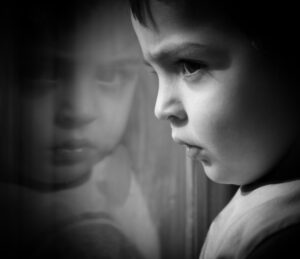
The subject of identity became topical recently due to an opinion piece by Fraser McAlpine in The Guardian about the idea that some people were being deterred from adopting children because of a disliking of the children’s first names.
The piece included some rather inflammatory statements, at one stage asking adopters to “put down our tools of class warfare, throw aside snark and prejudice, and allow adopted children to be themselves”. In essence Mr McAlpine’s underlying message appeared to be about the importance of children’s identity and how it is affected by adoption and fostering. I can only guess that he is starting from a place of genuine concern for vulnerable children. The worry, for anyone interested in improving outcomes for fostered and adopted children, will be that the important message of the piece is lost due to the “snarky” tone of the article.
The piece was met by adopters on Twitter and The Adoption Social with counter-argument and the recounting of experiences that were very different from Mr McAlpine’s reported experience of adopters as selfishly unconcerned with the identity of their children. I won’t say too much about these blogs as I’m not an adopter and the actual blogs say it so much better than I could.
I will, however, add my experience into the mix, that is, that most adopters and long-term foster carers that I have worked with are well informed, thoughtful and respectful of their child(ren)’s identity. Those that don’t start that way, for one understandable reason or another, can usually be taken there by someone they trust helping them to re-activate their empathy for their child. The difference between this process, which facilitates meaningful change, and the bombastically critical approach of Mr McAlpine is the topic of another PAFCA article (coming soon).
Regardless of Mr McAlpine’s rather ineffective strategy for encouraging the change he perceives is necessary, there remains the issue of identity and the integration of birth-family and new-family stories. It’s this topic that I think adopters and foster carers are, in fact, very interested in, in order to do the very best for their children.
What are the known facts about changing names during adoption and the impact on children?
Whilst anecdotal evidence, such as Mr McAlpine’s, about the importance of children’s names in adoption is undoubtedly influential on a personal level, it is inappropriate to use such evidence to draw universal conclusions.
After a thorough literature search there appear to be no published studies that look scientifically at the importance of a fostered or adopted child’s name to their sense of identity. There is, however, quite a substantial amount of literature on the importance of adopted and fostered children’s birth family history in relation to their ongoing positive identity.
What are the facts about the impacts on fostered and adopted children’s identity of being fostered or adopted?
First, we need to have some kind of consistent idea of what we’re talking about when we use the word “Identity”. It is such an ambiguous concept that I thought this definition might help us in our thinking.
“The construction of a sense of self, and personal uniqueness, through awareness of particular physical and psychological characteristics that both differentiate individuals from each other and link them together. Achievement of identity requires knowledge about social and genetic antecedents and the ability to incorporate personal history into a continuing narrative as self-awareness is mediated through new experiences, relationships and social contexts.” (1 p.12).
Having reviewed the literature it seems that the evidence is really quite conclusive in suggesting that restricting information about adopted and fostered children’s families of origin is damaging to their sense of identity, psychological health and the relationships within their new family (2, 3, 4, 5, 6, 7, 8, 9, 10 and 11). A point well illustrated by the quote from Triseliotis (1973) below.
“. . the ‘I’ of the present is an accumulation of all the ‘I’s of yesterday and yester-year and can only be understood in the context of family relationships, relatives, origins, environment, culture, etc . . . All of these experiences are interrelated by the growing individual and eventually form the core of [one’s] identity.” (2 pp. 80–81)
Based on my experience of foster carers and adopters I’m guessing that this won’t be news to many of you. This evidence has been synthesised into statute, policy and training (11, 12, 13 and 14). The law now makes provision for adopted people to find out information about their birth families, has made the use of life-story books to document and create conversations about children’s histories, common-place and it forms an integral part of adoption and foster care training.
In the last 15 years or so we have moved great deal in our perceptions about what is the best level of information for a fostered or adopted child to have about their background. In a study conducted in 1983 25% of adopted children were reported to have not known that they were adopted until after the age of 12. 75% of adopted children and 50% of long-term fostered children were reported to have experienced little or no discussion of their family of origin. Things have changed since then, towards a more empathic approach to parenting and prioritising the emotional and psychological needs of children (though there is still much more to do).
What don’t we know that we need to ask more questions about? Where do we go from here?
We need to understand much more about the significance of names to children’s identities. We currently “know” almost nothing in an objective sense.
We also need to work on extending the use of empathy to apply it at different levels at the same time i.e. moving from prioritising adults over children or children over adults. Empathy is not a finite resource, we are not in an “either/or” situation with empathy. It does, however, take more emotional energy from the people administering it, it is effortful and exhausting, just ask any adoptive parent or foster carer. What doesn’t help anyone to change and develop is unconstructive criticism, it doesn’t help children, carers, social workers nor even social commentators.
There is an inherent problem in the idea that has sparked this debate i.e. a lack of empathy for the journey and emotional worlds of foster carers and adopters. The assumption, or perhaps expectation, that anyone embarking upon that journey must be ready to ignore, suppress and/or lie about their inner worlds and feelings about adoption or fostering, lest they be criticised and shamed into doing so.
The parenting relationship, regardless of whether the child is a birth child or he or she is adopted or fostered, is at its best and most sustainable when it is reciprocal. That is not to say that the weight of responsibility is equal, it is not, but neither can any sustainable relationship be based on a narratives of “rescue”, “gratitude” or corrosive self-sacrifice. Such indiscriminate approaches to adoption and fostering are destined to end in dissatisfaction, disaffection and a lack of the reciprocity which we know to be necessary for rewarding (and healing) parent-child relationships.
In relation to identity and naming, it is crucial for children that they are understood in the context of their past, present and potential future. It is however just as crucial to the development of successful parent-child relationships that parents’ own inner worlds are also considered and respected. In order for adults to be all of the things that developmentally traumatised children need (accepting, empathic, calm, warm, tolerant, loving, fun etc. etc.) adopters and foster carers must not be forced into repressing their thoughts and feelings about their relationship with their child via punishment and criticism. Suppressing such things will only temporarily hold them back and the shame and defensive anger that it potentially creates will taint any hope of an intuitive, reciprocal, healing parent-child relationship.
In relation to the specific question of whether adopted children’s names should be changed; parents should be helped to fully understand the impacts of a name change upon their child’s identity and offered any help necessary to engage empathically with the consequences of doing so. Adults should also be assisted to fully and honestly contemplate the potential impact, on the development of an attached parent-child relationship, of keeping a child’s birth name. If problems are identified then, in order to enable the child’s best chance of a positive identity, parents and carers should be offered non-judgmental, empathic support in overcoming any difficulties they may experience in relation to their child’s background. Bullying prospective parents into changing their emotional reaction, or pretending to, via criticism, will not create the parents that traumatised children need.